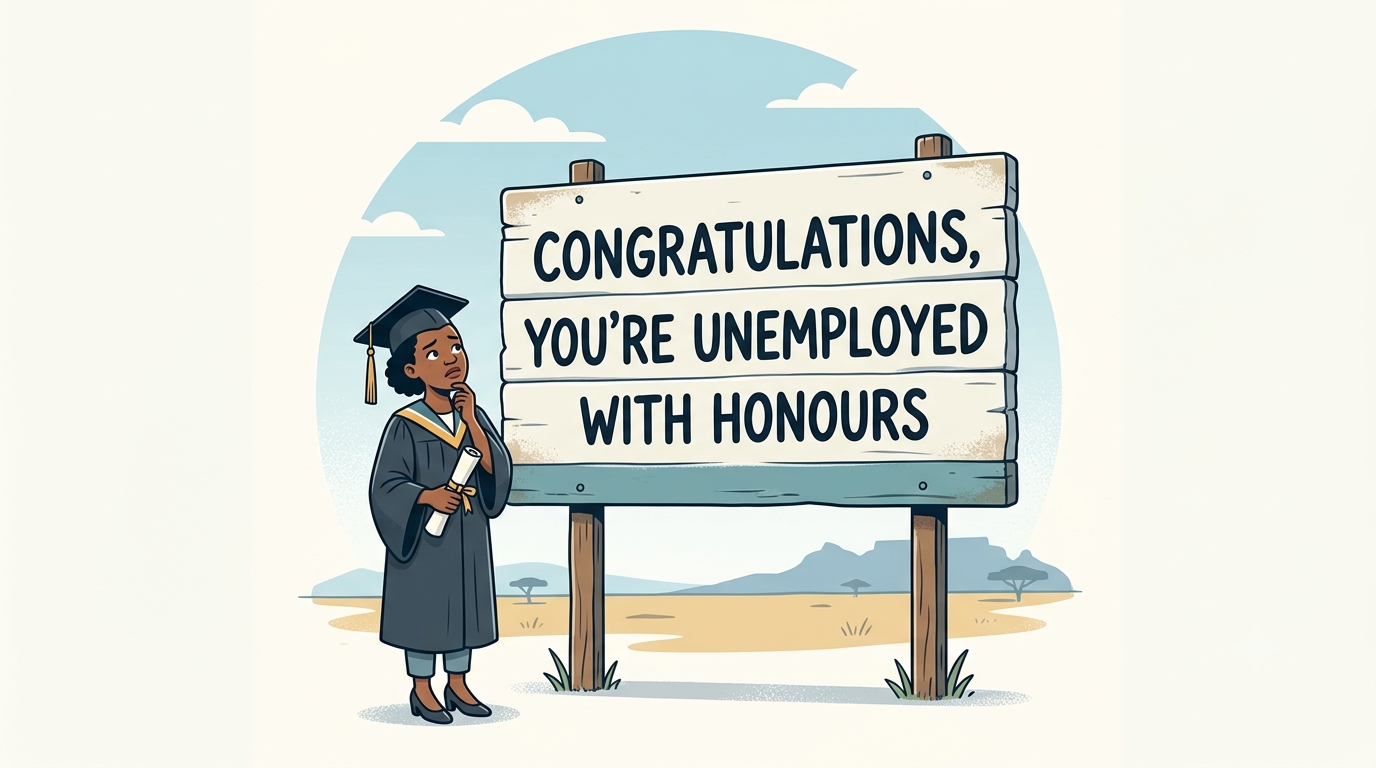
Degrees That Still Offer Strong Career Opportunities in the Age of AI
Artificial intelligence has changed the way people think about education and careers.
For years, students were encouraged to go to university, earn a degree and use that qualification to build a career. But today, many young people are asking a different question: Will the degree I choose still be valuable in a world where AI can do so many tasks?
It is a fair question.
AI can write, analyse information, generate images, assist with programming, automate administrative tasks and perform many other activities that once required human workers. Naturally, this has made some students nervous about choosing a career that could be significantly changed by technology.
However, AI does not mean that university degrees have suddenly become useless.
In many industries, AI is creating new opportunities while changing existing jobs. The most valuable graduates may not necessarily be those whose jobs are impossible for AI to affect. Instead, they may be people who understand their profession and know how to use AI effectively within it.
So, which degrees could continue to offer strong career opportunities in the age of AI?
Computer Science and Software Engineering
It may seem strange to put computer science at the top of a list about AI because AI can already write code.
However, AI actually makes understanding technology more important, not less.
Businesses still need people who understand software architecture, databases, cybersecurity, cloud computing, systems and how different technologies work together.
AI can generate code, but someone still needs to understand what the software is supposed to accomplish, identify problems, make technical decisions and ensure that systems are reliable and secure.
Computer science graduates can also move into areas such as artificial intelligence, machine learning, data engineering, cybersecurity, cloud computing and software development.
The key is not to compete with AI by trying to do exactly what AI does.
Instead, learn how to use AI as a tool while developing strong technical foundations.
Data Science and Statistics
The amount of data being generated by businesses, governments and individuals continues to grow.
Organisations need people who can understand that data and turn it into useful information.
This is where statistics, data science and analytics remain important.
AI can process enormous amounts of information, but organisations still need people who understand statistical concepts, research methods, probability, modelling and how to interpret results responsibly.
A strong background in statistics can also be useful in areas such as finance, healthcare, marketing, economics, technology and scientific research.
The combination of statistics, programming and AI can be particularly powerful.
Cybersecurity
As organisations become more dependent on technology, protecting digital systems becomes increasingly important.
Cybersecurity professionals help organisations protect networks, applications, data and infrastructure from attacks.
AI can be used by cybersecurity teams to detect unusual activity and identify potential threats more quickly.
However, AI can also be used by attackers, creating new security challenges.
This means the need for people who understand cybersecurity is unlikely to disappear simply because AI exists.
If anything, the increasing use of AI and digital systems could make cybersecurity even more important.
Healthcare and Medicine
Healthcare is another area where human expertise remains extremely important.
Doctors, nurses, pharmacists, physiotherapists, medical researchers and other healthcare professionals work with complex human situations that cannot simply be reduced to an automated process.
AI can assist healthcare professionals with analysing medical information, identifying patterns and supporting certain decisions.
But healthcare also involves communication, empathy, professional judgement, ethical considerations and direct interaction with patients.
For students interested in healthcare, AI should be viewed as a tool that can support professionals rather than automatically replace them.
Engineering
Engineering remains another strong field because modern economies depend on physical infrastructure, technology, energy, manufacturing and transportation.
Engineers design, test and improve systems that exist in the physical world.
Fields such as electrical engineering, mechanical engineering, civil engineering, chemical engineering and industrial engineering can all interact with new technologies.
AI may change how engineers perform calculations, analyse designs and optimise systems, but that does not eliminate the need for people who understand engineering principles.
In fact, engineers who combine traditional engineering knowledge with modern digital tools could become particularly valuable.
Accounting and Finance
It may seem that accounting is highly vulnerable to automation because many financial tasks involve numbers and repetitive processes.
And AI will certainly change the profession.
Routine bookkeeping, data entry, basic reporting and some forms of financial analysis can increasingly be automated.
But accounting and finance involve much more than entering numbers.
Professionals still need to interpret financial information, understand regulations, advise organisations, manage risk and make decisions based on business circumstances.
This means future finance professionals may need fewer manual skills and more analytical, technological and advisory skills.
Students entering this field should therefore consider learning data analytics, financial technology and AI tools alongside traditional financial knowledge.
Law
Law is another profession that is being influenced by AI.
AI can help search through large volumes of legal documents, summarise information and identify relevant material.
That does not mean lawyers are becoming unnecessary.
Legal professionals still need to understand legislation, interpret complex situations, advise clients, negotiate and make professional judgements.
Law also involves ethical and human considerations that cannot simply be handed over to an automated system.
The legal professionals of the future may increasingly use AI to handle time-consuming research and administrative tasks while focusing more on higher-value work.
Education
Teachers may not be the first profession people think about when discussing AI, but education remains fundamentally human.
AI can generate explanations, create exercises and assist students with learning.
However, teaching involves understanding individual students, managing classrooms, motivating learners and adapting lessons to different needs.
Teachers also play an important role in developing communication, critical thinking and social skills.
Rather than eliminating teachers, AI could become another tool that educators use to support learning.
People studying education should therefore consider developing digital and AI literacy alongside traditional teaching skills.
Environmental Science and Renewable Energy
The world continues to face major environmental challenges, including climate change, energy demand, water management and sustainability.
This creates opportunities for people with knowledge in environmental science, renewable energy, engineering and related fields.
Solar power, wind energy, energy storage, electric vehicles, water management and sustainable infrastructure all require skilled professionals.
AI can help analyse environmental data and optimise energy systems, but it does not eliminate the need for scientists, engineers and specialists who understand the physical systems involved.
Psychology and Human Services
Technology can automate many tasks, but understanding people remains difficult.
Psychology, social work, counselling and related fields involve human behaviour, relationships, communication and individual circumstances.
AI may assist professionals with administrative tasks or provide certain forms of support, but human interaction remains central to these professions.
For people interested in careers focused on helping others, degrees in psychology and related fields can still provide valuable foundations.
However, students should always research the specific professional requirements of the career they want to pursue, as some roles require postgraduate study or additional professional registration.
Supply Chain and Logistics
Modern businesses depend heavily on supply chains.
Companies need people who understand procurement, inventory management, transportation, warehousing and logistics.
AI can help businesses forecast demand, optimise routes and manage inventory.
But implementing these systems still requires people who understand how supply chains work in the real world.
As businesses become more data-driven, graduates who understand both logistics and technology could have an advantage.
What About Degrees That Are Not Directly Connected to Technology?
This is an important point.
The future does not belong only to computer scientists.
AI will affect almost every industry.
A marketing graduate who understands AI-powered analytics may be more valuable than one who ignores technology.
A finance graduate who can work with data may have an advantage.
A teacher who knows how to use AI responsibly in education can use technology to improve their work.
A lawyer who understands AI-related regulations and digital evidence can develop specialised expertise.
The lesson is that AI skills can be added to many different careers.
The Degree Alone Is Not Enough
One of the biggest mistakes students can make is choosing a degree and assuming the qualification will automatically lead to employment.
The job market has become more competitive.
Employers increasingly want people who can demonstrate practical skills.
If you study computer science, build software projects.
If you study data science, work with real datasets.
If you study marketing, create a portfolio.
If you study engineering, look for practical experience.
If you study finance, develop your analytical and technology skills.
Your degree provides a foundation.
Your practical experience shows employers what you can actually do.
Learn to Work With AI
Instead of asking whether AI will replace your profession, ask a more useful question:
How can AI make me better at my profession?
This shift in thinking can make a major difference.
A graduate who knows how to use AI tools responsibly, verify AI-generated information and incorporate AI into their workflow may be more productive than someone who refuses to use the technology.
However, using AI effectively does not mean blindly accepting everything it produces.
You still need knowledge.
You need to understand when an answer is wrong, when information needs verification and when human judgement is required.
That is why foundational education still matters.
Soft Skills Are Becoming More Important
Technical knowledge is only one part of employability.
Communication, teamwork, problem-solving, critical thinking, adaptability and professionalism remain important.
AI can produce an impressive answer, but businesses still need people who can communicate with colleagues, understand customers, lead teams and make decisions.
Students should therefore avoid focusing entirely on technical skills.
The strongest candidates will often combine technical knowledge with strong human skills.
Don't Choose a Degree Only Because AI Is Not There Yet
It would be a mistake to choose a degree simply because you think AI cannot affect it.
Technology changes quickly.
A profession that appears safe today could look very different in ten or twenty years.
Instead of trying to predict exactly which jobs AI will never touch, choose a field that interests you and develop the ability to adapt.
Learn how your industry works.
Understand technology.
Keep developing your skills.
Be willing to learn throughout your career.
Adaptability may be one of the most valuable career skills of all.
Research the South African Job Market
If you are choosing a degree in South Africa, do not base your decision entirely on what is trending internationally.
Look at the local job market.
Search job portals and company career pages.
Look at the qualifications employers request.
Pay attention to skills that appear repeatedly in job advertisements.
Research graduate programmes and entry-level positions.
Speak to people already working in the field.
This can give you a much more realistic picture of your potential career than simply choosing a degree because someone says it is "in demand."
There Is No Degree That Guarantees a Job
This is perhaps the most important point.
No degree can guarantee employment.
Even graduates in fields with strong demand can struggle to find their first job.
Economic conditions, location, experience, competition and employer requirements all influence whether someone gets hired.
A degree should therefore be viewed as an investment in your education and career potential, not as a guaranteed employment contract.
Final Thoughts
AI is changing the job market, but that does not mean that university degrees have become irrelevant.
Computer science, data science, cybersecurity, healthcare, engineering, finance, law, education, environmental science and many other fields can still offer valuable career opportunities.
However, the graduates who succeed may be those who understand that education does not end when they receive their degree.
The future belongs to people who can combine knowledge, practical skills, adaptability and technology.
Don't ask only, "Which degree will AI never replace?"
Ask:
"Which field interests me, where are people needed, and how can I become exceptionally useful by combining my education with the technology of the future?"
That is a much better question to build a career around.