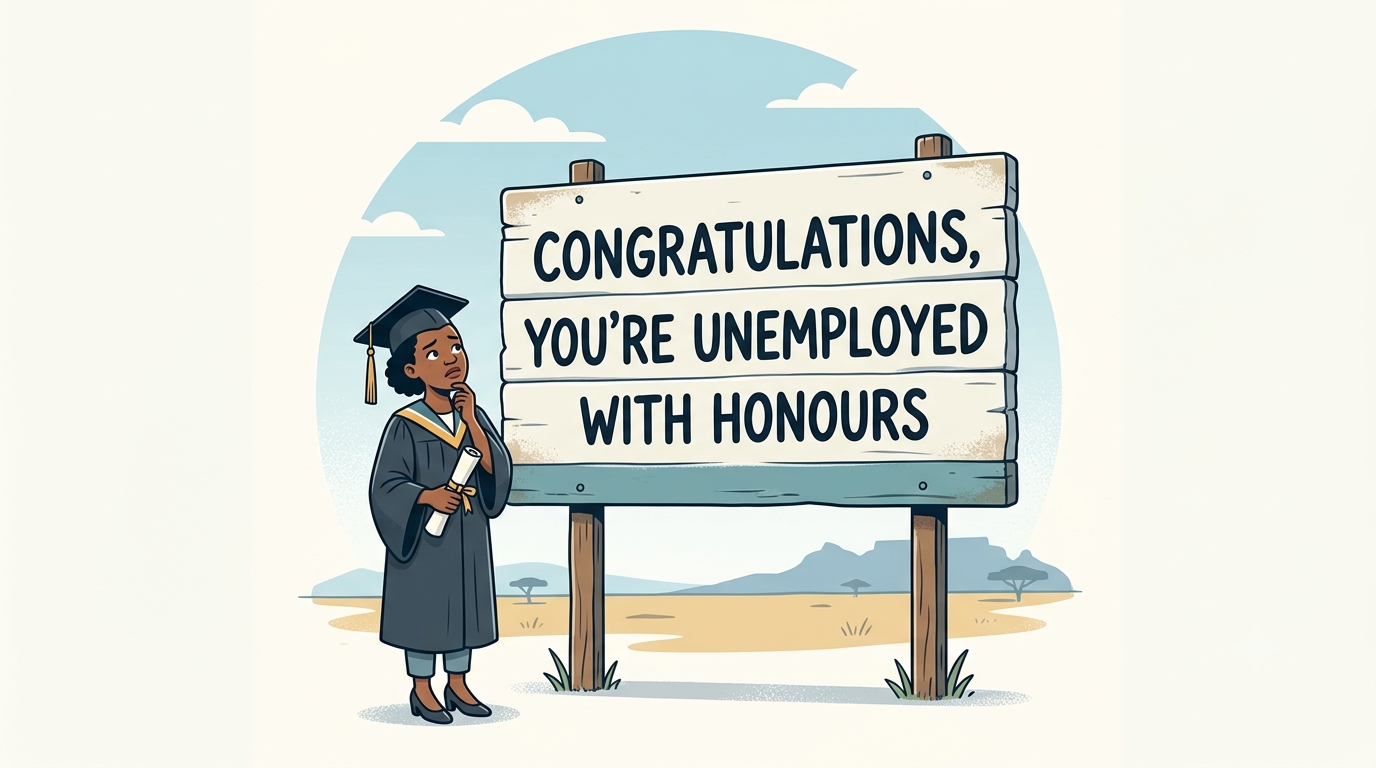
Is the Job Market Only Hard in South Africa, or Is It Happening Everywhere?
If you are currently looking for a job in South Africa, it can sometimes feel as though finding employment has never been this difficult. You send applications, update your CV, apply for internships and graduate programmes, and sometimes wait weeks without receiving a response.
It is understandable to look at the situation and wonder whether South Africa is experiencing something unique.
The reality is more complicated. South Africa does face some serious employment challenges, particularly when it comes to youth unemployment, but difficult conditions in the job market are not limited to South Africa. Across the world, workers and job seekers are dealing with economic uncertainty, changing skills requirements, technological disruption and increased competition for certain positions.
So, is the job market only hard in South Africa?
No. But South Africa has some particularly serious challenges that make the situation feel worse for many job seekers.
South Africa's Job Market Is Particularly Challenging
South Africa has one of the world's highest unemployment rates. The problem is especially severe among young people entering the labour market for the first time.
For many young South Africans, obtaining a qualification does not automatically lead to employment. Graduates can find themselves competing for a limited number of opportunities, while employers may ask for experience even for relatively junior positions.
This creates a difficult cycle.
A young person needs experience to get a job, but they often need a job to gain that experience.
The result is that internships, learnerships, graduate programmes and entry-level positions can attract very large numbers of applicants.
This is one reason the South African job market can feel particularly competitive.
But Other Countries Are Also Experiencing Difficulties
South Africa is not the only country where people are struggling to find suitable employment.
Job markets around the world have been affected by economic changes, technological developments, inflation, interest rates, restructuring and changes in consumer demand.
In some countries, unemployment rates may be significantly lower than South Africa's, but that does not necessarily mean that every job seeker is finding it easy to get a job.
A country can have a relatively low unemployment rate while still having problems such as underemployment, temporary work, low wages, skills mismatches or intense competition for highly desirable positions.
Someone searching for a graduate job in London, Toronto, New York, Nairobi or Johannesburg may face very different circumstances, but they can still experience the same frustration of sending applications without getting interviews.
The Graduate Job Market Has Become More Competitive
One of the biggest challenges facing young people in many countries is the competition for entry-level jobs.
More people are obtaining university qualifications, while some companies are becoming more selective about the skills they want from new employees.
A degree can demonstrate that you have studied a particular field, but employers may also want practical experience, technical skills, communication abilities and evidence that you can apply what you have learned.
This is not unique to South Africa.
Graduates in many countries are discovering that having a qualification is only one part of becoming competitive in the modern labour market.
Technology Is Changing the Workplace
Technology is another reason the job market is changing globally.
Automation, artificial intelligence and digital tools are changing how companies operate. Some tasks that previously required employees can now be completed more efficiently using software.
This does not mean that technology is simply eliminating every job. Instead, many jobs are changing.
Employers may now expect workers to understand digital tools that were not required several years ago.
For job seekers, this means that keeping your skills up to date has become increasingly important.
Someone who learned a particular skill five years ago may need to develop additional skills today to remain competitive.
The Rise of AI Is Adding Another Layer
Artificial intelligence has made the conversation about employment even more complicated.
Companies can now use AI to assist with tasks such as writing, research, data analysis, customer support, programming and administrative work.
This has created concerns about job displacement, but it has also created demand for people who understand how to use AI effectively.
The important point is that AI is not affecting every profession in exactly the same way.
Some jobs may be highly exposed to automation, while others may simply change as employees begin using AI as a tool.
This means job seekers should focus not only on finding a job but also on understanding how technology is changing their chosen industry.
There Is a Difference Between Unemployment and Job Quality
When people talk about the job market, they often focus entirely on the unemployment rate.
However, having a job does not necessarily mean that someone has a good or secure job.
Some workers may be employed part-time when they would prefer full-time employment. Others may work in positions that do not make use of their qualifications or provide enough income to meet their needs.
This is known as underemployment or labour underutilisation, depending on the situation being measured.
Therefore, looking only at unemployment statistics does not tell us everything about the health of a country's labour market.
Remote Work Has Increased Competition
Remote work has created opportunities for people to apply for jobs outside their immediate geographical area.
That sounds like good news, and it is.
However, remote work can also increase competition.
A company that previously recruited from one city may now receive applications from people across an entire country or even from different countries.
This means that a job seeker in South Africa may be competing against candidates from many other locations for the same remote position.
At the same time, South African workers can also access opportunities that were previously unavailable to them because of geography.
Remote work therefore creates both opportunities and additional competition.
Skills Mismatches Are a Global Problem
Another major issue affecting job markets around the world is the gap between the skills employers need and the skills job seekers possess.
A company may have vacancies but struggle to find people with the right technical or professional skills.
At the same time, thousands of people may be looking for work but lack the skills required for available positions.
This creates an unusual situation where unemployment can remain high while employers still report difficulty finding suitable candidates.
For job seekers, this means that understanding what employers actually need can be just as important as obtaining qualifications.
South Africa Has an Additional Challenge
Although difficult job markets are a global phenomenon, South Africa has some circumstances that make its employment challenge particularly serious.
The country has a large young population entering the labour market, while the economy has struggled to create enough employment opportunities.
This means that thousands of young people can enter the job market every year and compete for a relatively limited number of opportunities.
For someone who has spent years studying and then struggles to find their first job, the situation can understandably feel extremely discouraging.
But the problem is bigger than an individual job seeker's CV.
It involves economic growth, investment, education, infrastructure, skills development and the ability of businesses to create sustainable employment.
What Can Job Seekers Do?
Although individuals cannot control the entire economy, they can control how they respond to a changing job market.
The first step is to understand what employers in your field actually want.
Look at job advertisements and identify the skills that repeatedly appear. If several employers are asking for the same software, technical skill or certification, consider developing that skill.
Practical experience is also valuable.
If you are struggling to find formal employment, consider building projects, volunteering, freelancing, internships or other forms of practical experience where appropriate.
For example, someone studying software development can build applications and contribute to projects. Someone interested in marketing can create campaigns or build a portfolio. Someone interested in data analysis can work with public datasets and demonstrate their analytical abilities.
The goal is to give employers evidence of what you can do.
Your Network Can Also Matter
Job searching is not always about submitting applications online.
Networking can help you discover opportunities that you might not find through traditional job boards.
Connect with people in your industry, attend career events, participate in professional communities and maintain a professional online presence.
Networking does not mean asking every person you meet for a job.
It means building genuine professional relationships and learning more about your industry.
Sometimes a conversation can introduce you to an opportunity that you would never have discovered through a standard job search.
Don't Compare Your Journey Too Closely With Others
When unemployment is high, it is easy to look at someone else who found a job quickly and wonder what they did differently.
The reality is that everyone's circumstances are different.
One person may have professional connections. Another may have several years of experience. Someone else may have entered an industry experiencing strong growth.
If you are struggling to find employment, it does not automatically mean that you are not capable.
The labour market itself can be extremely competitive.
The important thing is to keep improving your skills, learning from unsuccessful applications and continuing to look for opportunities.
Is It Easier to Find a Job Overseas?
It can be tempting to assume that moving to another country will automatically solve your employment problems.
That is not necessarily true.
Different countries have different labour markets, immigration requirements, qualifications, salary levels and costs of living.
A country with a lower unemployment rate may still have high competition for certain professions.
If you are considering working overseas, research the specific industry and occupation rather than assuming that the entire country's job market will be easier.
The Future of Work Will Continue to Change
The job market is unlikely to remain the same.
Technology will continue to develop. AI will become more integrated into workplaces. New industries will emerge, while some existing roles will change.
This can sound frightening, but change can also create opportunities.
Many of today's jobs did not exist in their current form several decades ago. New technologies created entire industries and career paths that previous generations could not have predicted.
The challenge for today's job seekers is to remain adaptable.
So, Is the Job Market Only Hard in South Africa?
No.
People in many parts of the world are experiencing difficult job markets, particularly young people and workers trying to enter competitive industries.
However, South Africa's unemployment challenge is particularly severe, and the situation facing young South Africans deserves serious attention.
The important thing is not to assume that every rejection means you are doing something wrong.
Sometimes the problem is not the individual. Sometimes there simply are not enough opportunities available for the number of people looking for work.
That does not mean you should stop trying.
Instead, use the time to strengthen your CV, develop practical skills, build your professional network and understand where opportunities are emerging.
The modern job market rewards people who are willing to learn and adapt.
South Africa is facing a serious employment challenge, but it is not alone. Around the world, the nature of work is changing. The people who understand that change and prepare for it may be better positioned to take advantage of the opportunities that come next.