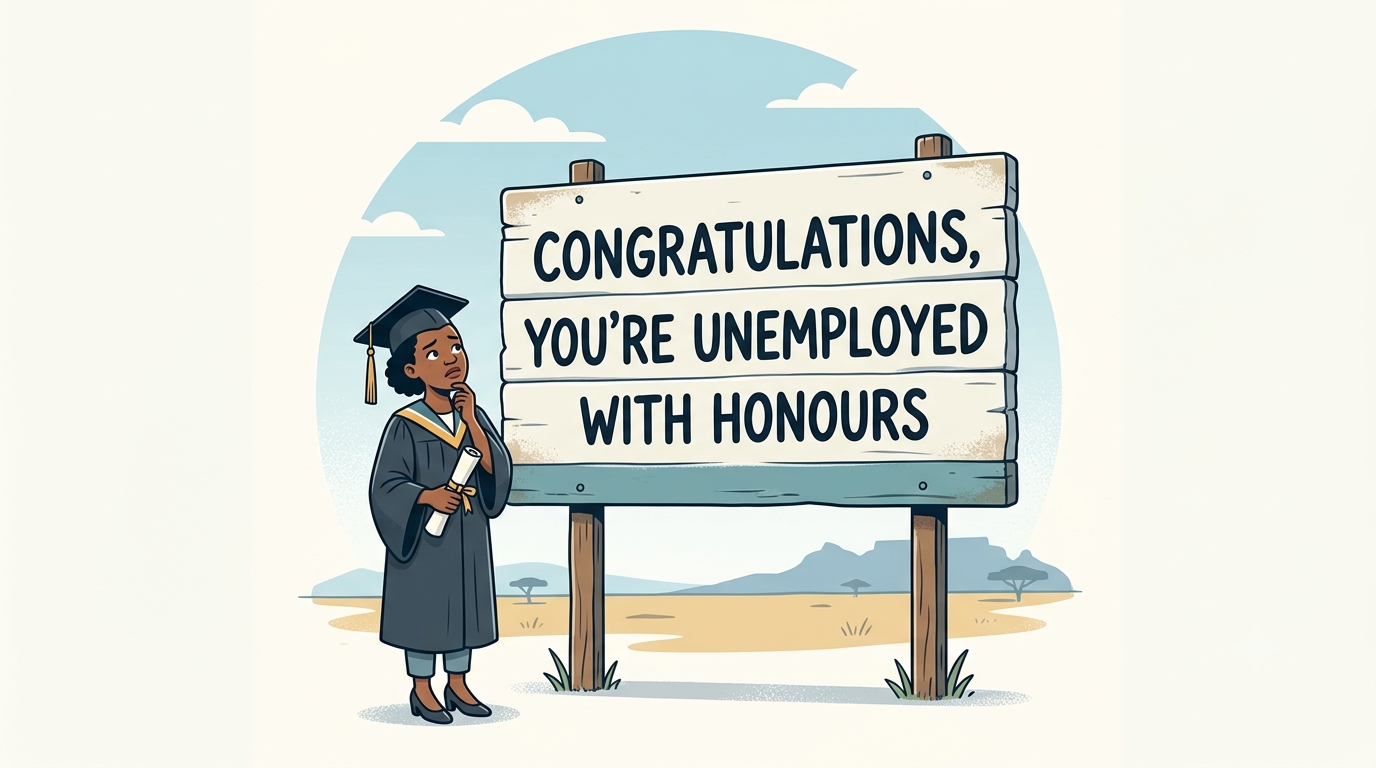
Is AI Taking All the Jobs?
Artificial intelligence has gone from being something people mostly heard about in technology discussions to becoming part of everyday life. Companies are using AI to analyse information, write content, answer customer questions, automate repetitive tasks and assist employees with their work. As these technologies become more capable, one question is becoming increasingly common among job seekers: Is AI taking all the jobs?
The short answer is no. AI is not taking all the jobs, but it is changing the way many jobs are performed. Some tasks that once required a person can now be completed with the help of AI, while completely new roles and opportunities are also emerging. For job seekers, the bigger issue may not be whether AI will replace every job, but whether the skills employers are looking for will change.
Why Are People Worried About AI and Jobs?
The concern about AI and employment is understandable. Businesses are always looking for ways to improve productivity, reduce costs and complete work more efficiently. If a computer system can perform a repetitive task faster than a person, an employer may have less need for employees to spend their time doing that particular task.
This does not necessarily mean that an entire job disappears. In many cases, only certain parts of a job can be automated.
For example, an administrative employee may previously have spent hours organising information, writing routine emails or creating basic reports. AI tools can now assist with some of these tasks. The employee may still be needed, but their role could shift towards tasks requiring communication, decision-making, coordination and problem-solving.
This distinction is important because jobs are made up of many different tasks.
AI Is More Likely to Change Jobs Than Eliminate Them Completely
When people talk about AI replacing workers, they sometimes imagine a situation where a company simply replaces an entire department with computers. In reality, the impact is often more complicated.
AI can automate particular tasks while leaving other responsibilities to people.
A customer service employee, for example, may use an AI-powered system to answer common questions. However, complicated complaints may still require a person who can understand the situation, communicate with the customer and make a decision.
Similarly, accountants can use software to automate certain calculations and processes, but businesses still need professionals who understand financial information and can make informed decisions.
The same pattern can appear across many industries.
Which Jobs Are More Exposed to AI?
Jobs involving repetitive, predictable and highly structured tasks are generally more likely to be affected by automation.
This can include certain administrative tasks, basic data processing, routine customer support, document processing and some forms of content production.
However, being exposed to AI does not automatically mean that a profession will disappear.
In many cases, AI becomes another tool used by employees. A worker who learns how to use that tool effectively may become more productive rather than being replaced by it.
The important question is therefore not simply whether your job can be affected by AI. It is also whether you can adapt as the technology changes.
New Jobs Are Emerging
Technological change does not only remove certain tasks. It can also create new opportunities.
The growth of AI has increased demand for people working in areas such as AI development, data science, machine learning, cybersecurity, software development, AI product management and technology consulting.
There are also jobs that did not previously exist in their current form, such as people specialising in implementing AI systems within businesses, evaluating AI outputs, managing AI-related projects and developing processes around new technologies.
The technology sector is not the only area affected. AI can create opportunities for people in marketing, finance, education, healthcare, research, design and many other fields.
This is why learning about AI does not necessarily mean becoming an AI engineer. Understanding how AI can be used within your own profession may be just as valuable.
AI Could Change Entry-Level Jobs
One area that deserves particular attention is entry-level employment.
Many young people begin their careers by performing routine tasks while learning how an organisation operates. If some of those tasks become automated, companies may rethink what entry-level employees are expected to do.
This could make it harder to enter certain professions if employers expect new workers to arrive with stronger technical or analytical skills.
At the same time, AI can also make it easier for young workers to learn and become productive. A graduate can use AI tools to help understand unfamiliar concepts, practise skills, analyse information and improve their work.
The challenge is making sure that AI becomes a tool for learning rather than a replacement for learning.
What Does This Mean for South African Job Seekers?
For South African job seekers, the rise of AI is another reason to focus on developing relevant and adaptable skills.
South Africa already has a highly competitive employment environment, particularly for young people and graduates. As technology changes the workplace, having a qualification alone may not always be enough to stand out.
Job seekers should consider developing a combination of technical and human skills.
Technical skills could include data analysis, programming, digital tools, cybersecurity, cloud computing or other technologies relevant to their industry.
Human skills are equally important. Communication, critical thinking, creativity, teamwork, leadership, adaptability and problem-solving are difficult to reduce to a simple automated process.
The strongest candidates may increasingly be those who can combine both.
You Don't Need to Become an AI Expert
One common misconception is that everyone needs to become a programmer or AI specialist to remain employable.
That is not necessarily true.
A person working in marketing could learn how to use AI for research, brainstorming and analysing customer information. An accountant could learn how AI-powered tools are changing financial processes. A teacher could explore ways technology can support lesson planning and administrative work.
The goal is to understand how technology can improve the work you already do.
Think of AI as another tool in your professional toolbox.
Learn to Work With AI
Instead of asking, "How do I compete with AI?" a more useful question may be, "How can I work with AI?"
People who understand how to use technology effectively may have an advantage over people who refuse to adapt.
For example, two employees may have similar qualifications and experience. One knows how to use AI tools to automate repetitive work, analyse information and improve productivity, while the other continues doing everything manually.
The first employee may be able to complete certain tasks more efficiently while spending more time on work that requires human judgement.
This does not mean that AI automatically makes someone better at their job. It means that knowing how to use the right tools can become an additional professional skill.
Human Skills Still Matter
AI can generate text, analyse information, recognise patterns and perform many other tasks. But workplaces still depend heavily on human interaction.
People need to negotiate, build relationships, lead teams, understand customers, make difficult decisions and take responsibility for important outcomes.
A machine may provide information, but a person may still need to decide what that information means and what action should be taken.
This is why skills such as communication, empathy, leadership, critical thinking and judgement remain valuable.
Technology can change how work is performed without removing the need for people.
What Should Students and Graduates Do?
Students and graduates should not ignore AI. At the same time, they should not panic about it.
Instead, focus on building a strong foundation.
Learn the fundamentals of your chosen field. Develop practical experience through projects, internships, volunteering or other opportunities. Learn relevant digital tools and understand how AI is being used within your industry.
If you are studying computer science, for example, do not only learn how to use AI coding tools. Understand programming fundamentals, databases, algorithms, software development and problem-solving.
If you are studying finance, understand financial principles while learning how technology is changing financial services.
AI can help you work faster, but strong fundamentals help you know whether the output is actually correct.
The Biggest Risk May Be Refusing to Adapt
The conversation around AI often focuses on whether AI will replace people.
There is another possibility worth considering: people who know how to use AI may replace people who refuse to adapt.
This does not mean that every worker needs to become an AI expert overnight. It means that learning should not stop when you receive your qualification or get your first job.
The workplace is constantly changing. The ability to learn new tools and adapt to new ways of working can be one of the most valuable skills you develop.
So, Is AI Taking All the Jobs?
No.
AI is not taking all the jobs, but it is changing the workplace.
Some tasks will become automated. Some jobs will change significantly. Some roles may become less common, while new opportunities will emerge.
The future of work is unlikely to be a simple competition between humans and machines. In many industries, the more realistic future is humans working alongside increasingly capable technology.
For job seekers, the message should not be "AI is coming, so there is no point looking for work."
The better message is: learn, adapt and understand how technology is changing your industry.
Your qualification still matters. Your experience still matters. Your ability to communicate, solve problems and work with other people still matters.
But adding technology skills to that foundation can make you even more valuable.
AI may change the jobs of the future, but that does not mean there will be no jobs in the future.
The people who are willing to keep learning may be in the best position to take advantage of the opportunities that come next.