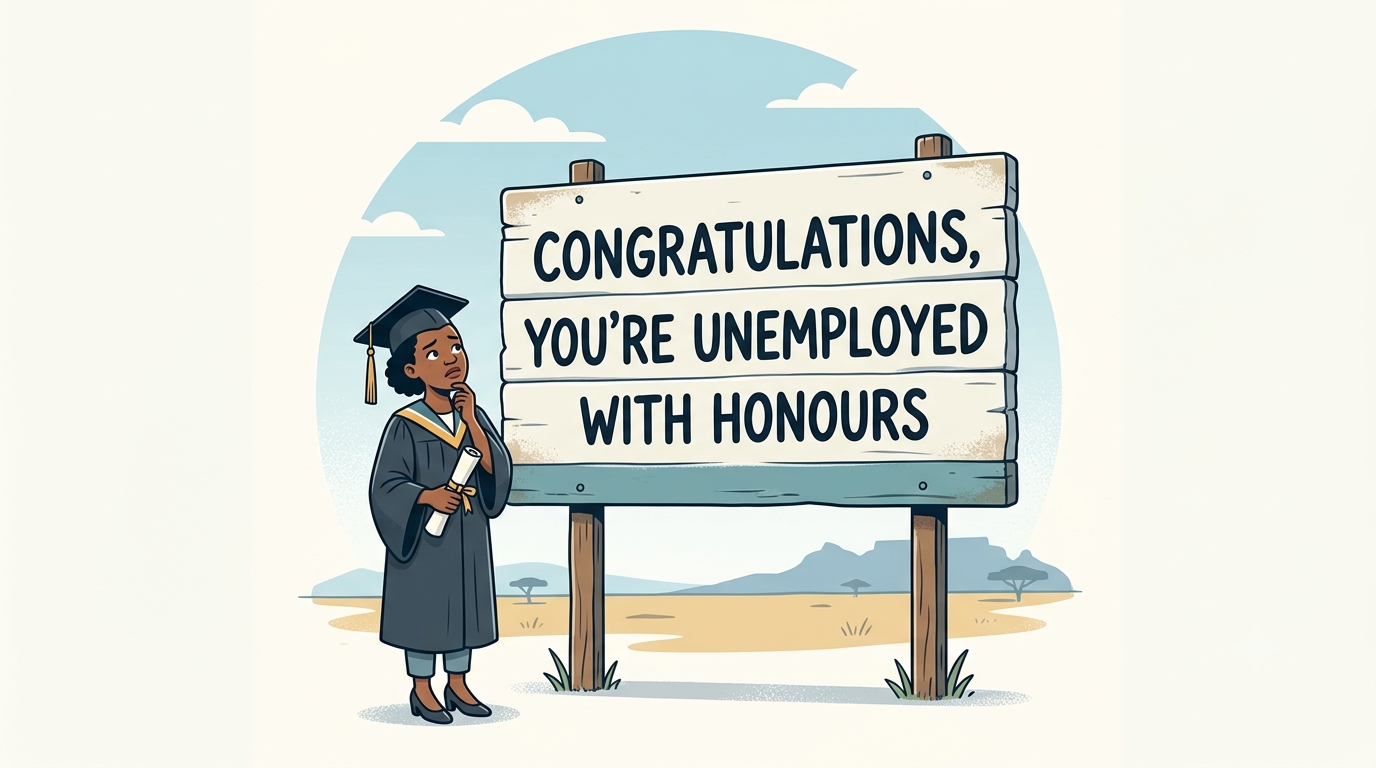
Is the Government Doing Enough to Protect Jobs in South Africa?
For many South Africans, finding a job has become more than just a matter of sending out a CV. It has become a long and uncertain process where thousands of people compete for a limited number of opportunities.
At the same time, workers are watching companies cut costs, reduce staff and restructure their businesses. When another major employer announces retrenchments, the same question often comes up: What is the government doing about it?
It is an uncomfortable question, but it is one worth asking.
South Africa has had a serious unemployment problem for years, and the latest figures show just how difficult the situation remains. According to Statistics South Africa's Quarterly Labour Force Survey, the official unemployment rate increased from 31.4% in the fourth quarter of 2025 to 32.7% in the first quarter of 2026. During the same period, the number of employed people fell by 345,000 to 16.8 million, while the number of unemployed people increased by 301,000 to 8.1 million.
Those are not just statistics.
Behind every number is a person trying to pay rent, support a family, pay for transport, finish their studies or simply build a future.
The Job Market Is Under Serious Pressure
South Africa's employment challenge is not simply about people being unable to find jobs.
The country also needs to create enough new employment opportunities to keep up with a growing working-age population.
In the first quarter of 2026, the formal non-agricultural sector alone lost about 80,000 jobs compared with the previous quarter, according to Stats SA's Quarterly Employment Statistics.
The broader Quarterly Labour Force Survey showed that employment fell by 345,000 across the economy during the same period.
Some industries experienced employment growth. Manufacturing added around 38,000 jobs, mining added 32,000 and agriculture added 10,000. However, these gains were outweighed by significant losses in sectors including community and social services, construction and transport.
This tells us something important: the problem is not simply that "there are no jobs."
The economy is creating some opportunities while losing others, and the challenge is making sure that enough sustainable jobs are created in the right places and industries.
Young People Are Carrying a Huge Burden
Perhaps the most worrying part of South Africa's employment crisis is its effect on young people.
Stats SA reported that the unemployment rate among people aged 15–34 reached 45.8% in the first quarter of 2026. There were approximately 4.7 million unemployed young people during the quarter.
For those aged 15–24, the situation was even more difficult, with an unemployment rate of 60.9%. Stats SA also reported that 37.6% of people aged 15–24 were not in employment, education or training.
This should concern everyone.
A young person who spends years looking for their first opportunity is not simply missing a salary. They are also missing the opportunity to gain experience, build professional networks and establish financial independence.
And when large numbers of young people remain outside the labour market for extended periods, the consequences can affect the economy for years.
So What Is Government Actually Doing?
It would be unfair to say that the government is doing absolutely nothing.
There are several programmes and policies aimed at employment creation and job preservation.
For example, the National Treasury's Jobs Fund opened its 13th funding round in May 2026, focusing on projects that can create sustainable employment, particularly in the green and informal economies.
The government has also set a target of facilitating two million work opportunities by 2030, alongside plans to expand youth employment interventions and strengthen labour-market programmes. Parliament's Portfolio Committee on Employment and Labour has, however, stressed that these commitments need clear implementation plans, measurable outcomes and adequate resources.
That last point is important.
Announcing a target is one thing.
Actually creating sustainable jobs is another.
Job Creation Is Not the Same as Government Employment
There is an important distinction that sometimes gets lost in discussions about unemployment.
Government can create temporary work opportunities through public programmes, but South Africa also needs a growing private sector capable of creating permanent jobs.
A sustainable economy cannot rely entirely on government hiring people.
Businesses need to expand. New companies need to be created. Small businesses need access to finance and markets. Infrastructure needs to improve. Investors need confidence. Workers need relevant skills.
Government has an important role in creating the conditions in which all of this can happen.
What About Retrenchments?
This is where the frustration becomes particularly understandable.
When thousands of workers face retrenchment, people naturally want the government to intervene.
South Africa's labour laws provide processes that employers must follow when considering retrenchments based on operational requirements. Section 189 of the Labour Relations Act provides for consultation during such processes.
The government can also intervene in certain situations.
A recent example came in June 2026, when the Minister of Employment and Labour intervened in the proposed retrenchment of more than 22,000 Pick n Pay workers. The department said the intervention helped bring the company, organised labour and government to the bargaining table, with the parties agreeing to continue negotiations around possible solutions.
This shows that government intervention can sometimes help prevent or reduce job losses.
But it also highlights the limitations of government power.
The government cannot simply order every struggling private company to keep every position forever.
Companies also have to remain financially sustainable.
Protecting Jobs Is Complicated
Imagine a company that is losing money every year.
If the government forces that company to keep employing more people than it can afford, the company may eventually collapse completely.
That could result in even more job losses.
On the other hand, allowing large numbers of workers to lose their jobs without meaningful intervention can have devastating consequences for families and communities.
This is why job preservation is complicated.
The challenge for government is to create an environment where businesses can grow while workers are protected from unfair treatment and supported when employment is lost.
What About the Unemployment Insurance Fund?
Government also provides support to eligible workers who lose their jobs through the Unemployment Insurance Fund.
For example, when approximately 3,000 workers were affected by the termination of contracts under a public employment programme at eThekwini Municipality, the Department of Employment and Labour said it would provide onsite services to help eligible workers apply for UIF benefits.
This kind of support is important.
But UIF is ultimately a safety net.
It does not solve the underlying problem of unemployment.
A person receiving temporary unemployment benefits still needs a sustainable source of income once those benefits end.
The Bigger Problem Is Economic Growth
Perhaps the biggest issue is that South Africa cannot solve unemployment through labour policy alone.
The country needs stronger economic growth.
Businesses need to invest and expand.
Small businesses need fewer unnecessary obstacles.
Infrastructure needs to work.
Electricity and transport systems need to be reliable.
People need access to quality education and relevant skills.
And there needs to be enough economic activity for companies to keep hiring.
If the economy is not growing strongly enough, government programmes can only do so much.
Skills Matter, But Skills Are Not Everything
There is often a tendency to tell unemployed people that they simply need to "learn more skills."
Skills are certainly important.
But telling millions of unemployed people to get more qualifications without addressing the shortage of available opportunities misses part of the problem.
A highly qualified person can still struggle to find work if there are not enough suitable positions.
Stats SA's latest figures demonstrate that even graduates are not completely protected from unemployment. In Q1 2026, the unemployment rate among graduates was 12.2%, although this remained substantially below the national rate.
The answer therefore needs to involve both sides: people need relevant skills, and the economy needs to create opportunities for those skills to be used.
What Should Government Be Doing?
There is no single policy that will suddenly solve South Africa's unemployment crisis.
But there are several areas where stronger action could make a difference.
Government can focus on making it easier for businesses, particularly small and growing businesses, to operate and expand.
It can improve infrastructure and public services that businesses depend on.
It can strengthen technical and vocational education.
It can make it easier for young people to gain meaningful work experience.
It can improve the connection between education institutions and employers.
It can support entrepreneurship without creating unnecessary barriers for small businesses.
And when large-scale retrenchments are threatened, government can bring employers and workers together early enough to explore realistic alternatives.
We Also Need to Talk About Small Businesses
Large companies receive a lot of attention when they announce retrenchments, but small businesses are extremely important to employment.
A growing small business can employ its first worker, then its second, then five more.
Thousands of businesses doing this across the country can make a significant difference.
This means South Africa's employment strategy should not only focus on attracting large corporations.
It should also ask:
How do we make it easier for ordinary South Africans to start, survive and grow businesses?
The answer involves access to finance, markets, infrastructure, skills and a business environment that does not unnecessarily discourage entrepreneurship.
Is the Government Doing Enough?
This is where the debate becomes more complicated.
There are clearly government programmes, policies and interventions aimed at employment creation and job preservation. The government is not completely ignoring the unemployment crisis.
However, the scale of the problem is enormous.
An unemployment rate of 32.7%, combined with youth unemployment approaching half of the youth labour force, shows that existing interventions have not solved the problem.
That does not necessarily mean that every government programme has failed.
It means the response needs to be judged by outcomes, not only announcements.
If billions are spent on employment programmes, people should be able to ask how many sustainable jobs were created.
If government announces a target of two million work opportunities, people should eventually be able to see whether that target was achieved.
If policies are introduced to support businesses, we should be able to measure whether businesses actually expanded and hired more people.
The question should not simply be "What has government announced?"
It should be "What has actually changed for people looking for work?"
Government Cannot Do It Alone
At the same time, it would be unrealistic to expect government alone to solve unemployment.
The private sector, educational institutions, investors, entrepreneurs and communities all have roles to play.
Companies need to invest in people.
Universities and colleges need to ensure that students are developing skills relevant to a changing economy.
Entrepreneurs need an environment where they can build businesses.
And job seekers need opportunities to develop skills and experience that employers value.
Employment is ultimately an economic issue that requires cooperation across society.
The Human Cost Cannot Be Ignored
Behind every employment statistic is a human story.
It is the graduate who has applied for dozens of positions without receiving an interview.
It is the parent who has worked for the same company for years and suddenly finds themselves facing retrenchment.
It is the young person who wants to work but has never been given an opportunity to gain experience.
It is the small business owner who wants to hire but cannot afford to expand.
These are the people who should be at the centre of the conversation about South Africa's employment crisis.
Final Thoughts
South Africa's unemployment problem did not appear overnight, and it will not disappear because of one government programme.
The government has taken steps to create employment opportunities, support workers and intervene when large-scale job losses threaten communities. There are also major commitments around job creation and economic growth.
But the latest labour-market figures show that the country still has a very long way to go.
The unemployment rate has risen, hundreds of thousands of jobs were lost in the first quarter of 2026, and young people continue to face an especially difficult path into the labour market.
So, is the government doing enough?
There is no simple yes-or-no answer.
There are things being done, but the results suggest that more needs to happen, and that implementation matters just as much as policy.
South Africans do not need another promise that jobs will be created someday. They need an economy that creates real opportunities today and continues creating them tomorrow.
The real measure of success should not be how many employment promises are made. It should be how many people who are currently searching for work can eventually say: "I finally got my opportunity."