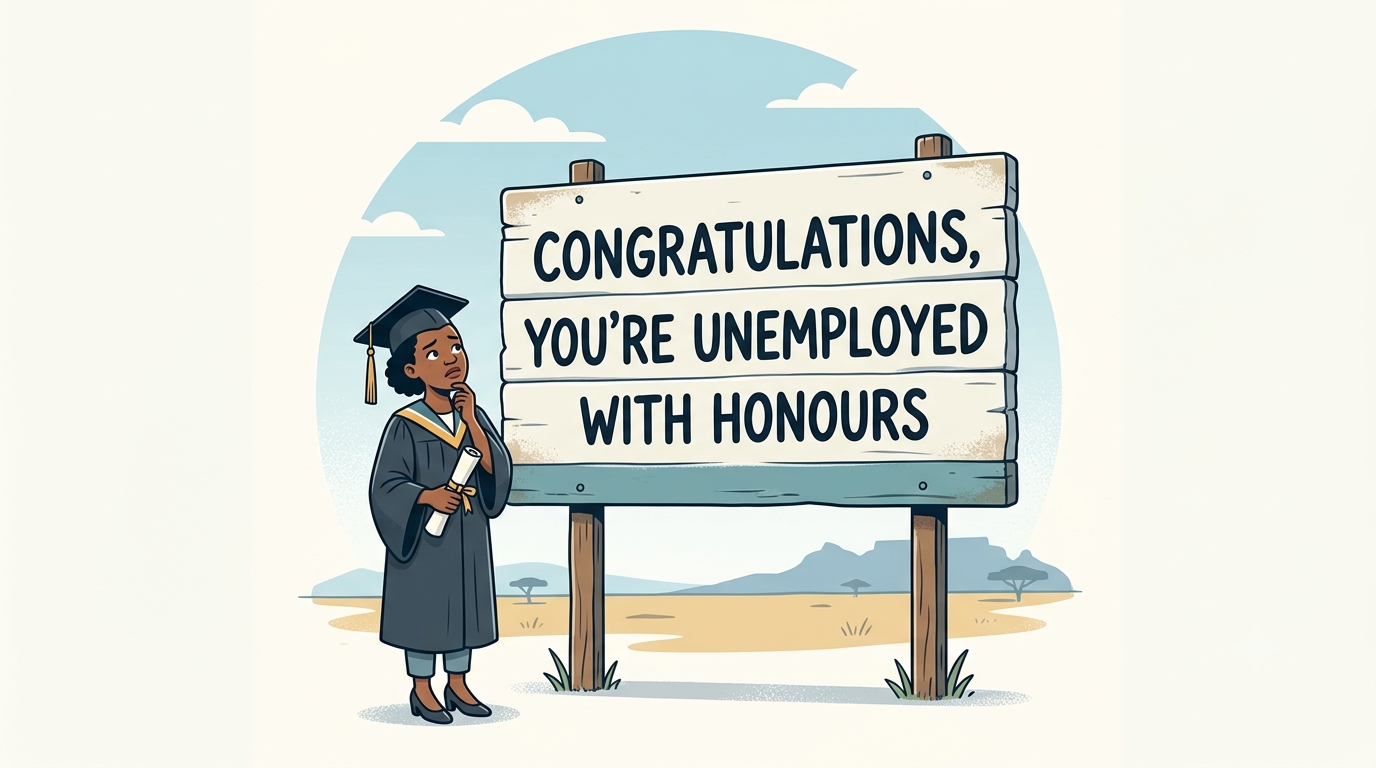
Job Hunting Can Be Mentally Draining: Here Is How to Stay Mentally Strong During This Journey
Looking for a job can be exhausting in ways that people do not always talk about.
You wake up, check job boards, find a few positions that look promising, update your CV, write applications and submit them. Then you wait. Sometimes you hear nothing. Sometimes you receive a rejection email. Other times, you make it through several stages of the recruitment process only to find out that someone else was selected.
After doing this repeatedly, it can start to affect how you feel about yourself.
You may begin asking yourself whether your qualifications are good enough, whether you are applying for the wrong jobs or whether something is wrong with you because you cannot seem to get an opportunity.
If you have been feeling this way, it is important to remember one thing: struggling to find a job does not mean that you are a failure.
The job market can be extremely competitive, and sometimes there are simply more people looking for opportunities than there are available positions.
That does not make the process easy, but understanding this can help you avoid turning every rejection into a judgement about your personal worth.
Job Rejection Can Feel Personal
One of the hardest parts of job hunting is rejection.
You may spend hours working on an application and researching a company, only to receive a short email saying that your application was unsuccessful.
After several rejections, it can become difficult not to take them personally.
But a company rejecting your application does not necessarily mean that you are not capable.
There could have been hundreds of applicants. Someone else may have had more experience. The company may have chosen an internal candidate. The position may have been changed or cancelled. You may simply not have been the best match for that particular role.
There are many reasons why an application does not work out.
Try not to turn one employer's decision into a permanent judgement about yourself.
Give Yourself Permission to Have Bad Days
Staying mentally strong does not mean pretending that everything is fine all the time.
There will be days when you feel frustrated.
There will be days when you do not want to look at another job advertisement.
There may even be days when you question whether continuing to apply is worth it.
That does not make you weak.
You are allowed to be disappointed. You are allowed to take a break. You are allowed to acknowledge that the process is difficult.
Mental strength is not about never feeling discouraged. It is about recognising those feelings without allowing them to completely control your next step.
Don't Make Job Hunting Your Entire Life
When you desperately want a job, it is easy for job hunting to take over your entire day.
You may spend hours scrolling through vacancies, checking your email every few minutes and constantly thinking about your next application.
This can leave you feeling mentally exhausted.
Try creating specific periods for job searching instead.
For example, you could spend part of your morning looking for suitable vacancies and submitting applications, then move on to other activities for the rest of the day.
You do not need to be searching for jobs every minute to prove that you are serious about finding work.
Taking a break does not mean that you have given up.
Create a Routine
Unemployment can sometimes remove the structure that a job or university timetable provides.
Without a routine, days can start to blend together.
Creating a simple daily structure can help.
Wake up at a reasonable time. Get dressed. Spend some time looking for opportunities. Work on your skills. Exercise or go for a walk. Work on a personal project. Spend time with family or friends.
Your routine does not need to be complicated.
The goal is to give your day some structure and make sure that your entire day is not centred around whether someone has replied to your application.
Set Realistic Application Goals
You do not necessarily need to apply for dozens of jobs every day.
Sending applications simply to increase your number can lead to burnout, especially if the applications are poorly tailored.
Instead, focus on applying for positions that genuinely match your qualifications and experience.
You could set a goal of submitting a certain number of quality applications each week.
This allows you to measure your effort without feeling like you have failed because you did not submit another 30 applications today.
Quality matters.
Improve One Thing at a Time
When you are not receiving interviews, it can be tempting to completely rewrite everything.
You might change your CV every day, rewrite your cover letter repeatedly and constantly question your qualifications.
Instead, make small improvements.
Review your CV. Ask whether it clearly communicates your skills and experience.
Look at the types of jobs you are applying for. Are they suitable for your background?
If you are getting applications but no interviews, your CV or application strategy may need improvement.
If you are getting interviews but no offers, you may want to work on your interview skills.
You do not have to fix everything at once.
Focus on the part of the process that needs the most attention.
Keep Learning While You Search
One of the best ways to make the job-search period feel productive is to continue developing yourself.
Take a course. Learn a new software tool. Improve your communication skills. Build a project. Work on your portfolio. Read about your industry.
If you are a graduate, consider developing practical skills related to your qualification.
For example, someone interested in technology could build projects and improve their programming skills. Someone interested in marketing could develop a portfolio. Someone interested in data analysis could practise working with real datasets.
You are not only waiting for a job.
You are preparing yourself for the next opportunity.
Don't Compare Yourself to Everyone Online
Social media can make unemployment feel even worse.
You might see someone posting about their new job, promotion or successful career while you are still searching.
It is easy to think:
"Everyone is moving forward except me."
But social media rarely shows the entire story.
You do not know how long that person searched for work, how many applications they submitted, what opportunities they had or what difficulties they experienced before reaching that point.
Your journey does not have to happen at the same speed as someone else's.
Focus on your own progress.
Talk to People You Trust
Job hunting can become isolating, especially if you spend most of your time at home.
Talk to people you trust.
Tell a friend or family member when you are struggling. Speak to someone who can encourage you or simply listen.
You do not always need someone to solve the problem.
Sometimes you just need someone to remind you that you are not facing it alone.
You can also connect with other job seekers. Sharing experiences can help you realise that many people are facing similar challenges.
Be Careful About How You Measure Progress
Getting a job is obviously the ultimate goal, but it should not be the only way you measure progress.
You can also measure progress by the things you can control.
Did you improve your CV?
Did you learn a new skill?
Did you apply for a position that genuinely matched your experience?
Did you complete a project?
Did you practise for an interview?
Did you make a useful professional connection?
These things may not immediately result in an offer, but they can improve your position over time.
Take Breaks Without Feeling Guilty
There is a common belief that if you are unemployed, you should constantly be doing something productive.
That can create unnecessary pressure.
Rest is also important.
Watch a movie. Read a book. Play a game. Spend time with friends. Go outside. Enjoy your hobbies.
You do not need to feel guilty every time you are not working on your job search.
Taking time to recharge can help you return to your applications with more energy and a clearer mind.
Remember That Your Current Situation Is Not Permanent
When you have been unemployed for a long time, it can feel as though nothing is going to change.
Try to separate how things feel right now from what will happen in the future.
Your current situation is not a prediction of your entire career.
People find their first jobs at different ages. Some people change careers. Some graduates take longer than expected to find their first opportunity. Others eventually discover opportunities they never expected.
You cannot know exactly how your career will develop.
Keep working towards the things you can control.
Don't Be Afraid to Change Your Strategy
Staying persistent does not mean doing exactly the same thing forever.
If you have been sending applications for months without getting results, it may be time to review your strategy.
Look at the types of positions you are applying for.
Consider whether you need additional skills.
Ask someone experienced to review your CV.
Practise answering interview questions.
Explore industries you may not have considered before.
Consider internships, graduate programmes, temporary work, freelance opportunities or other legitimate ways of gaining experience.
Changing your approach is not giving up.
Sometimes it is simply recognising that your current strategy is not producing the results you want.
Don't Let Rejection Define You
One of the most important things to remember during a difficult job search is that your employment status is not your identity.
Being unemployed does not mean that you are lazy.
Not getting an interview does not mean that you are unintelligent.
Being rejected does not mean that you have no potential.
The job market makes decisions based on many factors, and those decisions do not determine your value as a person.
You are still learning, developing and building your future.
Ask for Help When You Need It
Sometimes the pressure of unemployment can become more than you feel able to handle on your own.
If you notice that your wellbeing is being seriously affected, consider talking to a trusted adult, family member, teacher, counsellor or another person you trust.
You do not have to wait until things feel unbearable before asking for support.
Looking after your wellbeing is not separate from building your career. It is part of it.
Final Thoughts
Job hunting can be one of the most frustrating periods of your career.
You can do everything you think you are supposed to do and still wait longer than expected for an opportunity.
There will be rejection. There will be unanswered applications. There will be days when you question whether your efforts are making a difference.
But try to remember that a difficult job search is a difficult period, not a definition of who you are.
Apply strategically. Keep improving your skills. Take breaks. Talk to people. Maintain a routine. Celebrate small progress and give yourself time to recharge.
Most importantly, do not measure your worth by the number of rejection emails sitting in your inbox.
Your job search is only one chapter of your career, not the entire story.