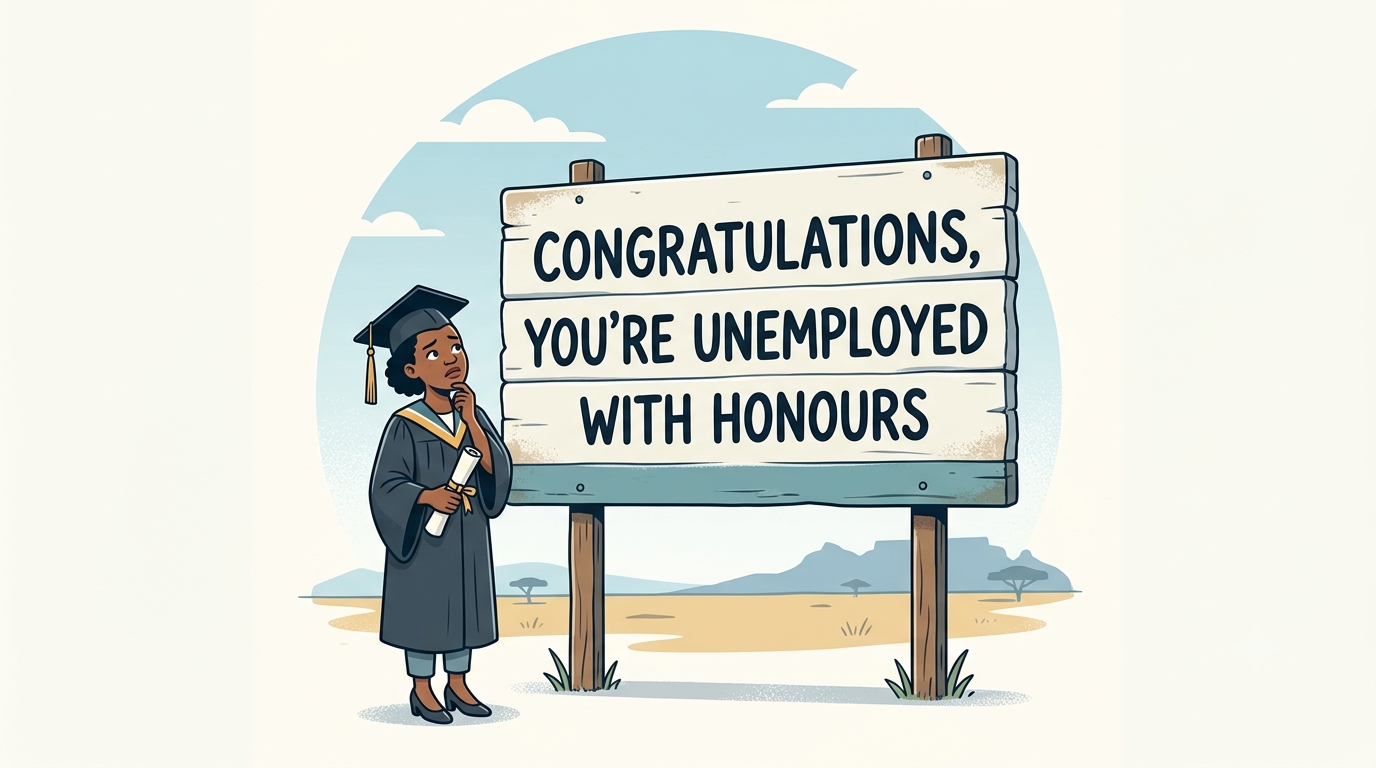
The Reality of Job Hunting: The Challenges Every Job Seeker Faces
Looking for a job sounds simple when you describe it in one sentence.
You find a vacancy, submit your CV, attend an interview and, hopefully, receive an offer.
But anyone who has actually spent months looking for work knows that the reality is very different.
Job hunting can be a long and frustrating journey. You can spend hours searching for opportunities, carefully preparing applications and attending interviews, only to receive rejection after rejection. Sometimes you do everything you think you are supposed to do and still hear absolutely nothing from employers.
For young people entering the job market for the first time, the experience can be particularly difficult.
You may have a qualification but no experience. You may have experience but struggle to find opportunities. You may apply for positions that ask for "entry-level" candidates while still requiring several years of experience.
It can leave you wondering: How am I supposed to get experience if nobody is willing to give me a chance?
Finding the Right Job Is Not Always Easy
One of the first challenges is simply finding jobs that are suitable for you.
There may be thousands of vacancies online, but only a small percentage may match your qualifications, location, experience and career goals.
You can spend hours scrolling through job boards and discover that many positions are either too senior, require qualifications you do not have or are located far away.
This can make the job search feel like a full-time job on its own.
And unlike a normal job, you are doing all that work without receiving a salary.
The "Entry-Level" Experience Problem
This is one of the biggest frustrations for graduates and young job seekers.
You find a job advertised as entry-level, only to discover that the employer wants one, two or even three years of experience.
It can be confusing.
If the position is supposed to be an entry-level opportunity, how are young people expected to have years of professional experience?
The reality is that employers sometimes use the term "entry-level" differently. Some may expect candidates to have internships, graduate programmes, freelance experience, university projects or other practical exposure.
This is why gaining practical experience while studying can be extremely valuable.
Sending Applications Into Silence
Perhaps one of the most frustrating parts of job hunting is not receiving a rejection.
It is receiving nothing at all.
You submit your CV and wait.
A week passes.
Then another.
You check your email repeatedly, hoping to see a response.
Eventually, you realise that you may never hear back.
This lack of communication can make the process feel discouraging because you have no idea whether your application was considered, rejected or simply forgotten.
Unfortunately, this is a common experience for many job seekers.
Competition Can Be Extremely High
A single job advertisement can attract hundreds of applications.
For popular graduate programmes and well-known companies, the number can be even higher.
This means that being qualified does not necessarily mean that you will get the job.
You may be competing against people with similar qualifications, more experience, stronger professional networks or skills that happen to match the employer's requirements more closely.
Sometimes you can be a good candidate and still not be selected.
That is one of the hardest things about job hunting to accept.
Rejection Can Affect Your Confidence
After enough unsuccessful applications, rejection can begin to affect how you see yourself.
You may start questioning your qualifications.
You may wonder whether you are good enough.
You might start comparing yourself to friends who have already found jobs.
It is important to remember that a job rejection is not a complete assessment of your abilities.
Employers make decisions based on many factors, including experience, timing, internal candidates, salary expectations, team requirements and the specific needs of the organisation.
Not getting a particular job does not mean that you have no value.
The Financial Pressure Is Real
Unemployment is not only emotionally difficult.
It can also create serious financial pressure.
You may have transport costs when attending interviews. You may need internet access to submit applications. You may need professional clothing for interviews. You may have family responsibilities or bills that still need to be paid.
For someone who has been unemployed for a long time, these costs can become increasingly difficult to manage.
This can create another layer of stress: you need a job, but searching for a job can itself require resources.
The Pressure From Family and Society
Job seekers can also experience pressure from people around them.
Family members may ask:
"Have you found a job yet?"
"Did you hear back from that company?"
"When are you going to start working?"
These questions may seem harmless, but hearing them repeatedly can become stressful.
Sometimes people do not understand how difficult the job market has become.
They may assume that if you are unemployed, you simply are not trying hard enough.
But unemployment is not always a reflection of someone's effort.
A person can be applying consistently and still struggle to find an opportunity.
Comparing Yourself to Friends
Social media has made this even more difficult.
You open LinkedIn or another social platform and see someone announcing their new job.
Then another person posts about their promotion.
Someone else shares a photo of their graduation and new workplace.
Meanwhile, you are still applying.
It can feel as though everyone is moving forward while you are standing still.
But social media only shows a small part of someone's life.
You do not see all the applications they submitted before receiving that offer.
You do not know what challenges they faced.
Your journey does not have to follow the same timeline as someone else's.
Relocation Can Be a Challenge
Sometimes the jobs are available, but they are in another city or province.
For someone without an income, relocating can be extremely difficult.
You may need money for accommodation, transport, food and other living expenses before receiving your first salary.
This creates a difficult situation for job seekers who are willing to move for work but cannot afford the initial cost of relocation.
It is one of the reasons why location remains an important factor in employment opportunities.
The Application Process Can Be Exhausting
Some companies have extremely long recruitment processes.
You may submit an application, complete an online assessment, attend an interview, complete another assessment and then attend a second or third interview.
This can take weeks or even months.
The longer the process continues, the more emotionally invested you can become.
And if you are eventually rejected, it can feel like you have lost weeks of effort.
A lengthy recruitment process is not necessarily a sign of a bad employer, but it can certainly be exhausting for candidates.
Ghost Jobs Make Things Even More Frustrating
Another challenge facing job seekers is the possibility of applying for vacancies that are no longer actively being filled.
Some job advertisements may remain online after a position has been filled. Others may be used to collect candidates for future hiring.
Not every old vacancy is a ghost job, but outdated listings can waste a job seeker's time.
This is why it is useful to check when a vacancy was posted and, where possible, verify it through the employer's official website.
Scams Target Desperate Job Seekers
Unfortunately, scammers know that unemployed people are actively looking for opportunities.
Fake job advertisements can promise easy work, high salaries or immediate employment.
Some may ask applicants to pay money before they can start working. Others may request sensitive personal or financial information.
Job seekers should be cautious whenever something seems too good to be true.
Research the employer before sharing sensitive information, and never assume that a professional-looking job advertisement automatically means the opportunity is legitimate.
Skills Keep Changing
Another challenge is that the skills employers want can change quickly.
Technology has transformed many industries, and artificial intelligence is accelerating that change.
A qualification that was highly relevant several years ago may now need to be supported by additional technical or digital skills.
This means job seekers cannot always rely on their qualification alone.
Continuous learning has become increasingly important.
The good news is that learning does not always require returning to university.
Online courses, practical projects, certifications and self-directed learning can help people develop additional skills.
The Experience Gap
There is another frustrating situation that many job seekers face.
You need experience to get a job, but you need a job to get experience.
This is particularly difficult for graduates.
One way to address the problem is to look for opportunities that allow you to demonstrate practical ability even before securing permanent employment.
Internships, volunteering, freelance work, university projects and personal projects